🌿The Complete Cold Wallet Guide: Everything You Need to Know Before Taking Your Crypto Keys Abroad
📝 This article is based on personal research and international community discussions—a plain-language guide to everything you need to know about cold wallets.
Why I Started Researching Cold Wallets
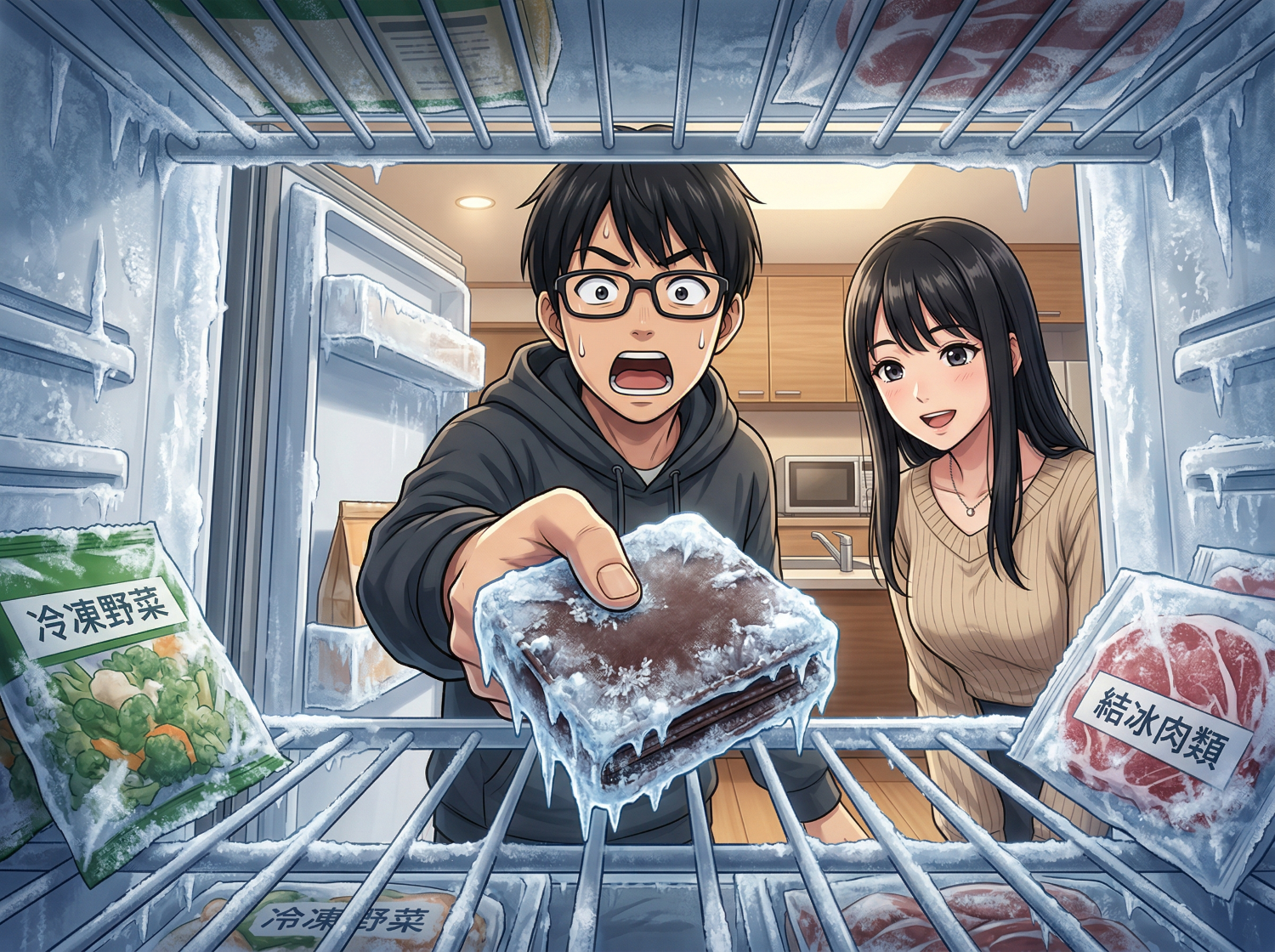
I'll admit it—my understanding of cryptocurrency used to stop at "I've heard Bitcoin is expensive." That changed one day when I overheard a friend chatting about someone they knew—a friend of a friend—who was in the middle of arranging to study abroad. Apparently, that person had asked their study-abroad consultant: "Can I bring a cold wallet to the destination country?"
I froze. Cold wallet? You can take it abroad? Why would you take it abroad? A cascade of question marks exploded in my head. That was the exact moment I realized I knew absolutely nothing about this whole world.
So I went down the rabbit hole: Reddit, local forums, customs regulations from multiple countries, and every jaw-dropping crypto scandal I could find. This article is the result—my attempt to explain cold wallets in the plainest language possible.
Lesson One: There's No "Money" in Your Wallet
First, let's bust a myth: neither hot wallets nor cold wallets actually contain money.
What they store is a private key—essentially a super-password that lets you access your assets on the blockchain (a giant, global, decentralized ledger). Your cryptocurrency always lives on the internet; the wallet is just your key.
Once you understand this, everything else clicks into place.
🔥 Hot Wallet vs. 🧊 Cold Wallet: The Showdown
| Category | 🔥 Hot Wallet | 🧊 Cold Wallet |
|---|---|---|
| Analogy | Your everyday wallet or Apple Pay | A blast-proof safe buried in the backyard |
| How it works | An app or browser extension, always online | A USB-like physical device, completely offline |
| Biggest advantage | Super convenient—buy, sell, and transfer in seconds | Maximum security—hackers can't reach what's not connected |
| Fatal flaw | Phone gets malware or you click a phishing link? Funds gone instantly | Transactions are a hassle; lose the device AND forget your seed phrase, and no one can help you |
| Best for | Pocket money for frequent trading | Life savings for long-term holders |
🍉 Three Cautionary Tales Every Crypto Holder Should Know
Before we talk about how to use a cold wallet, I think you need to hear what's gone wrong for others. Where money and humans intersect, drama is never far behind.
1. The Industry Leader's Betrayal: Ledger's "Recover" Scandal
Ledger, the world's largest cold wallet brand, had always claimed that "private keys never leave the device." Then in 2023, they rolled out a paid feature called "Recover": upload your ID, and they'd split your private key into three pieces backed up to cloud servers.
This proved that a firmware update could extract private keys from the device.
Reddit exploded. "So much for absolute security—this is the company installing its own backdoor!" Ledger apologized and promised to open-source the code, but trust was already shattered.
Lesson: Never enable any feature that uploads your private key to the internet. That defeats the entire purpose of owning a cold wallet.
2. The Bargain-Shopping Trap: Pre-Set Seed Phrases
Many newcomers, tempted by discounts, buy cold wallets from third-party marketplaces. The package arrives with a thoughtful "scratch card" revealing 24 English words—your seed phrase, already set up for you.
One user transferred $50,000 in, only to watch it vanish one second later. The seller had recorded the seed phrase in advance; the buyer essentially wired money straight into the scammer's pocket.
Lesson: Only buy cold wallets from the official website. Your seed phrase must be one you generate yourself during initial setup—any phrase provided by someone else is a scam.
3. The World's Most Expensive Landfill: James Howells' 12-Year Treasure Hunt
In 2013, British engineer James Howells accidentally threw away a hard drive containing the private keys to 8,000 Bitcoin—worth over $900 million at today's prices.
From 2013 to 2025, he fundraised, proposed using AI-powered robotic dogs to excavate the landfill, and even sued in court. The UK court dismissed his case, ruling that once waste enters a landfill, it becomes municipal property.
As one commenter put it: "The biggest security vulnerability isn't hackers—it's the person who takes out your trash."
Lesson: Back up your seed phrase in at least two separate locations. Never rely on a single USB drive or slip of paper.
✈️ Will Customs Stop You for Carrying a Cold Wallet?
This is probably the number-one worry for students heading abroad.
The answer: generally, you do not need to declare a cold wallet to customs.
The "declare amounts over $10,000" rule refers to physical cash, traveler's checks, and bearer instruments. A cold wallet is just a USB device holding a key—legally no different from a flash drive full of selfies.
That said, a few gentle reminders:
- Keep it low-key at security. Toss it in with your laptop and cables. If asked, say: "It's a USB security key for two-factor authentication."
- Taxes are the real issue. Once you become a tax resident in your host country and convert crypto to fiat currency, you may owe capital gains tax. Enforcement is tightening across the US and Europe.
- Watch out for restrictive jurisdictions. Countries hostile to cryptocurrency (e.g., China) could cause complications. Mainstream study-abroad destinations in North America, Europe, and Oceania are perfectly fine.
🌐 Real Stories: What Travelers Say About Cold Wallets at the Border
Regulations are one thing; the mood of the customs officer is another. I combed through Reddit, UK forums, and Japanese communities to compile real experiences:
🇺🇸 American Redditors
The consensus: "TSA doesn't care!" Most people toss their Ledger or Trezor in a carry-on bag alongside their laptop. No questions asked.
One commenter's gem: "Dude, millions of people pass through security every day. They're looking for dangerous items. Your cold wallet looks like a boring USB stick to them."
A few ultra-paranoid users suggest: "If you're truly worried, factory-reset the device before your flight, hide the seed phrase on your person, and restore on a new device after landing."
🇬🇧 British Forum Users
Similar experience—put it in your laptop bag and breeze through. The key advice: if you're randomly selected for a customs inspection, stay calm and low-key. Definitely don't volunteer "this thing holds a million pounds in Bitcoin," as that could trigger money-source inquiries.
🇯🇵 Japanese Community Members
Customs is a non-issue, but taxes are the final boss. Japanese users repeatedly warn foreign students: if you sell crypto for yen while living in Japan, the tax rate can reach a staggering 55% (classified as miscellaneous income). The consensus: "Getting the wallet in is easy. Cashing out in Japan? Prepare to cry at tax time."
📊 Global Cryptocurrency Adoption Rates
Curious how well customs officers around the world understand cold wallets? It correlates with local crypto adoption:
| Country / Region | Adoption Rate (approx.) | Key Characteristics |
|---|---|---|
| 🇦🇪 UAE | ~31.0% | World's highest—one in three people holds crypto |
| 🇹🇷 Turkey | ~25.6% | Severe local currency depreciation drives adoption |
| 🇺🇸 USA | ~15.5% | Largest cold wallet market share globally (~40%) |
| 🇬🇧 UK | ~10–12% | Mid-range globally; cold wallet users tend to be veterans |
| 🇯🇵 Japan | ~5.0% | Tech powerhouse but traditional finance is stable and tax policy discourages adoption |
(Sources: Triple-A, DemandSage, Mordor Intelligence market research reports)
💡 My Cold Wallet Security Playbook
After reading those horror stories, here's my distilled security checklist:
Purchasing & Setup
- Buy only from the official website—no secondhand, no marketplace deals.
- Your seed phrase must be self-generated during the device's first boot. If someone else provides it, it's a scam.
- Never enable any feature that transmits your private key online.
Storage & Backup
- Record your seed phrase on a waterproof, fireproof medium (steel seed-phrase plates are widely available).
- Never store it in a phone memo, messaging app, or cloud photo library—the moment it touches the internet, your "cold" wallet becomes "hot."
- Maintain at least two backups in separate, secure locations.
Travel Checklist
- Carry-on only: Pack the cold wallet with your laptop in carry-on luggage—never check it in.
- Separate the seed phrase: Keep the paper (or steel plate) with your 12 or 24 words in a different bag or hidden spot. As long as the seed phrase survives, losing the device costs you nothing.
- Stay cool: If a security officer picks it up, your line is: "This is a USB security key for two-factor authentication."
🎭 Bonus: When a Cold Wallet Meets a Salt Merchant (A Short Fiction)
Purely for entertainment!
In an age when everyone's busy getting fleeced in the cloud, I found myself in a makeshift shelter in Xiangshan District, being physically humiliated by an old man in a Qing-dynasty robe with a braided queue.
Jiajia huddled in the corner, clutching her emergency bag—just a passport and essentials. Outside, artillery thundered. Power out, internet flickering.
"I don't want war! I want to go study in the UK and escape all of this!" she wailed.
I tried reason and data. "Jiajia, it's even more dangerous to leave now. I've got a cold wallet with five Bitcoin inside. Inflation-proof, decentralized—even the military can't take it."
"But there's no internet. How do you cash out a cold wallet? Can Bitcoin buy water?" she shot back.
I felt my dignity as a modern-finance youth crumbling.
Then a strange light flashed from the window. Boss Qian crawled out of the secondhand wardrobe we'd assembled the night before, squinting at the explosions outside.
"Which porcelain kiln exploded? Why is it so loud?" He introduced himself with aristocratic disdain: "My surname is Qian. I'm a salt merchant. Last night I was struck by lightning, and I woke up here."
He glanced at the tanks rolling by. "That glowing iron carriage—I'll buy it. How many silver taels?"
"Dude, are you cosplaying in the wrong venue?" I frowned.
Boss Qian ignored me. He cast a contemptuous look at my cold wallet.
SLAP.
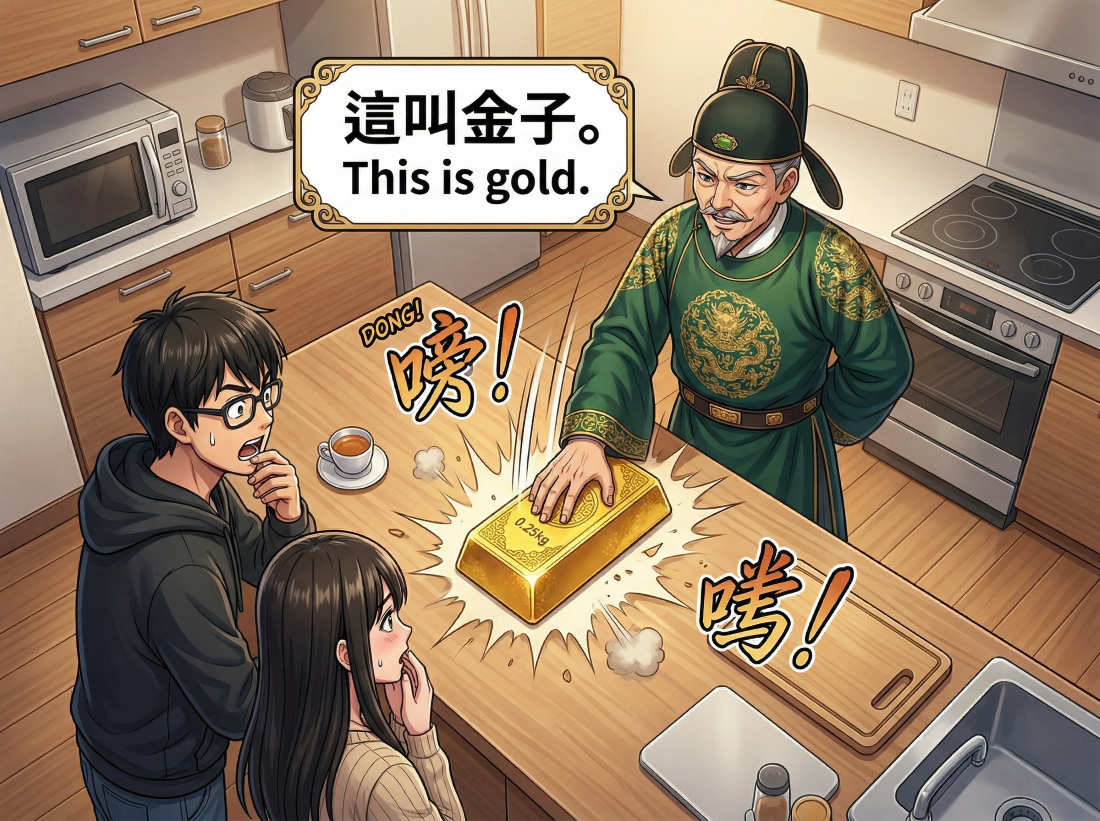
A gleaming gold bar—easily half a jin—crashed onto the table, splashing Jiajia's oat milk latte.
"This is called gold," he declared, then pulled a string of verdigris-patinated copper coins from his sleeve, clattering them across the coffee table. "Young lady, feel the weight."
"Wow… it's so heavy. Is this real gold?" Jiajia cooed, toying with a handful of pearls.
"This is called money." Boss Qian stroked his beard, grinning like a fox who'd seen it all. "Wealth is something you can see, touch, and feel the weight of when it lands on your foot. That little gadget of yours—your 'cold wallet'—makes my heart uneasy. When the world's falling apart and there's nothing to eat or drink, can you boil it into soup? Can you trade it for two steamed buns?"
Jiajia looked at the gold bar, then at the cold wallet.
I quietly pocketed my cold wallet and took a sip of my now-cold black coffee.
Bitter.
Closing Thoughts
A cold wallet isn't a magic solution, but in the world of digital assets, it's the closest thing we have to a personal safe. Understanding how it works, knowing its limits, and learning from others' mistakes—that's what real security looks like.
As for whether Boss Qian's gold bar or my Bitcoin is more reliable? I suspect we won't know the answer until the world truly falls apart.
Let's hope that day never comes.